Unlock a Smarter, More Personalized AI Assistant 💾
Turn on memory, personalize your profile, and train your AI to output your way. Rethinking EdTech investment: insights on why AI in EdTech needs funding now.
Feature Highlight
Unlock a Smarter, More Personalized AI Assistant 💾🗂️
Did you know you can turn on the Memory feature in Claire AI and Charlie AI to transform them into personalized teaching assistants? By enabling memory, your AI partner can remember key details about your educational settings, preferred instructional practices, and teaching goals —making every conversation smarter, faster, and more relevant to you.
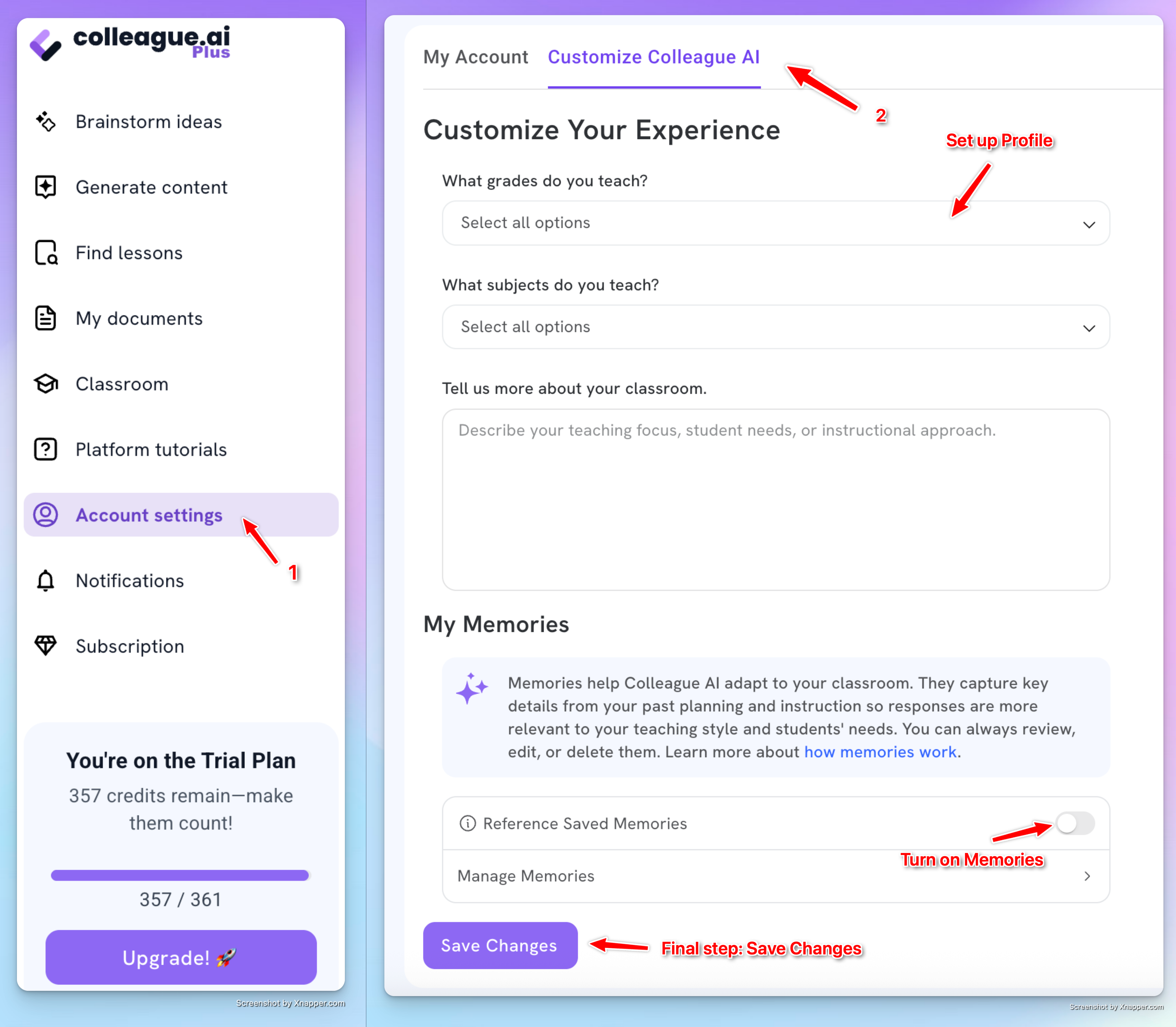
Whether you frequently teach project-based lessons, support multilingual learners, or use specific scaffolds in your classroom, your AI will start adapting to your unique style. Want to fine-tune your assistant further? Add profile information —such as your subject area, grade level, or classroom priorities—to receive responses with even greater precision.
You remain in full control. You can view, update, or delete memories at any time to keep your experience aligned with your evolving needs.
Start training your AI the way you’d mentor a co-teacher. Turn on memory today and watch your teaching assistant grow with you.
Our Community
The EdTech Paradox: AI Is Booming—So Why Isn’t Investment in AI-Powered Learning?
Dr. Min Sun,
AI is the economic story of our time. Yet, the very engine that powers tomorrow’s AI-literate workforce—AI-powered educational innovations—remains underfunded, misunderstood, and too often overlooked by investors.
In 2025, nearly 70% of North American VC dollars and 53% of global investments funneled into AI-related companies. Meanwhile, hashtagEdTech continues to face three historic hurdles: difficulties in measuring ROI in student outcomes, navigating long sales cycles, and complying with complex policy frameworks.
AI can change the hashtagEdTech industry:
- Better ROI measurement for individuals: Continuous, richer assessments give real-time insights into deep-thinking, problem-solving, and verbal skills.
- Better ROI measurement for institutions: Unified platforms dissolve silos in curriculum, assessment, and analytics, freeing teachers to focus on high-leverage interactions.
- Break down other traditional barriers: Faster pilots, automated compliance checks, and integrated workflows shorten sales cycles and make ROI visible.
We cannot build the AI-powered future without investing in the human intelligence that fuels it. Now is the moment for innovators, investors, and policymakers to seize this opportunity—and rewrite the story of EdTech.

Caption: AI for Future Classroom. Copyright @ Alexander Hensun, a 3rd grader at Bellevue Children’s Academy
This 3-minutes reading blog is my attempt to articulate what I've learned of why EdTech has historically been unattractive to investors and why AI may finally rewrite the story:
Your Professional Milestones
Colleague AI + University of Washington: The AICE Certified Educator Badge 🎓
We are excited to share an opportunity for your educators to earn the AICE (AI Competency for Educators) Badge, certified by the University of Washington College of Education.
- Functional – Using AI tools effectively and selecting the right tool for the right task.
- Content – Retrieving, adapting, and evaluating AI-generated materials for accuracy, inclusivity, and relevance.
- Pedagogical – Designing and delivering high-quality, AI-enhanced instruction.
- Ethical – Modeling responsible, fair, and transparent AI use for students.
real platform use clear and actionable for teachers growth-oriented rubric
Colleague AI – Building educator capacity for the AI era.
Interested in becoming certified?
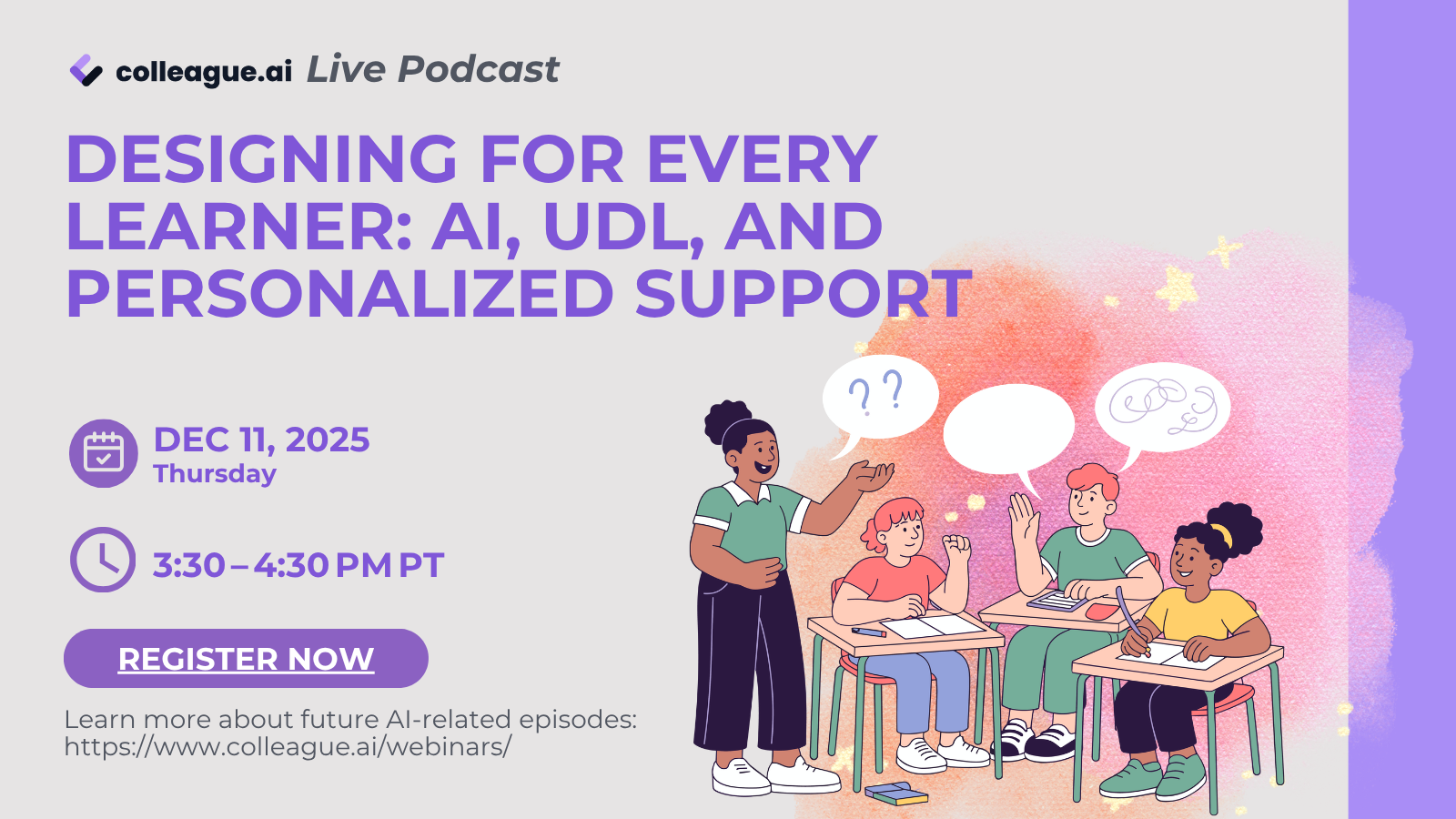
Live Podcast
✨